
Plymouth GT-1
Era: Pre-war American automobile, recontextualized
Goal: Integrate a street-legal pre-war body with a modern GT-1 competition chassis to create a race car disguised as a 1935 Plymouth, powered by a built V10 Viper engine.
Background: This project began with the engine: A Prefix built 800-horsepower, 9.0-liter stroker Dodge Viper V10 engine required a chassis and body capable of accommodating its size, mass, and performance envelope. A 1935 Plymouth was selected specifically because its original inline-six layout provided the necessary hood length and engine bay volume to house the V10 without resorting to changing that car's original proportions.
Pro-touring chassis for pre-war vehicles effectively do not exist. A clean-sheet chassis was possible, but given time constraints, a better option was leverage a proven competition chassis and adapt it to the Plymouth.
The donor was a championship-winning Chevrolet Corvette GT-1 built by Riggins Engineering. Its GT-1 chassis provided known rigidity, suspension geometry, safety systems, and performance credibility.
The objective was not to soften a race car, nor to build a traditional hot rod. Instead, the team set out to retain as much of the original Plymouth body as possible while reusing as many components from the GT-1 race car as practical—integrating two radically different eras into a single, coherent car.
The result is a race-oriented hot rod that defies conventional categorization: a pre-war silhouette wrapped around a modern competition chassis, engineered to out perform modern sports cars.


-
Suspension, Damping and Brakes
Suspension architecture remains true to the race car’s design. The front uses tubular double-wishbone geometry, while the rear employs a solid axle located by a Watts linkage. All suspension connections are heim-jointed to eliminate flex and maintain precise geometry under load.
Bearings, hubs, hardware, and wheel studs are all competition-grade, designed to withstand door-to-door racing loads rather than street-car duty cycles.
Because the Plymouth GT-1 weighs approximately 400 pounds more than the original race car, carries a different weight distribution, and operates on public roads, the original Penske dampers were replaced with newly valved units using slightly softer spring rates.
Braking hardware reflects a similar re-use approach. The race car’s NASCAR-derived AP Racing calipers are retained at the front, while StopTech calipers are used at the rear.
-
Powertrain Strategy
Power comes from a fourth-generation Dodge Viper V10, built by Prefix. Displacement was increased to 9.0 liters, with output rising to approximately 803 horsepower and 740 lb-ft of torque—most of it available low in the rev range.
The beauty of this engine is that is produces the same power and more torque than the race engine it replaces, and it runs on pump gas.
The engine is paired with an upgraded TR6060, selected for compatibility with the Viper engine.
-
Street Usability
Despite its uncompromising chassis, the Plymouth GT-1 was engineered to function reliably on the street.
Spring rates and damper valving were selected specifically for high-performance street driving and calibrated to the car’s final weight and balance. Brake systems were fitted with custom Porterfield street/track compound pads, ensuring safe cold performance (true race pads would not have operated reliably at street temperatures).
While the engine and transmission were rebuilt for significantly higher output, both remain fundamentally street-derived. The V10 is fuel-injected and managed by a Mopar ECU, resulting in modern startup behavior and predictable drivability. The TR6060 delivers smooth, precise shifts, reinforcing that this is a race car adapted for the street—not a street car pretending to be a race car.
-
Chassis and Structure
The foundation of the Plymouth GT-1 is a tube-frame unibody with an integrated roll cage derived from the original GT-1 race car. The front and rear clips of the donor race chassis were separated and repositioned to match the Plymouth’s 113-inch wheelbase, preserving all original suspension mounting points and kinematic geometry.
Ruffian fabricated the entire center section in-house, structurally tying the race chassis to the Plymouth body. A full eight-point roll cage was integrated and gusseted to the body wherever possible, increasing rigidity while allowing the pre-war shell to function as a stressed visual component rather than a loose skin.
This approach retained the integrity and intent of the GT-1 platform while allowing it to exist under a radically different body.
-
Stance and track width changes
The Plymouth GT-1's track width is eighteen inches wider than a stock 1935 Plymouth—an unavoidable consequence of the GT-1 race chassis beneath the body and a clear sign of the car’s true intent.
Front ride height is set at the practical minimum for street use; 4.75 inches, while the rear sits at 5.5 inches. This slight rake improves aerodynamic behavior while reinforcing the visual tension between the pre-war silhouette and the modern competition chassis underneath.
-
Fender, aero, and body modifications
All fenders are carbon fiber and were designed and fabricated in-house at Ruffian. Their primary role is functional: to fully cover the ultra-wide race tires while allowing complete suspension travel and lock-to-lock steering without interference. Proportionally, they communicate the car’s width without softening its aggression.
At the front, a functional ABS splitter manages airflow beneath the chassis. This transitions rearward into aluminum belly panels that run the length of the car and flow in a large carbon-fiber rear diffuser. Together, these elements generate meaningful downforce while keeping the upper bodywork minimized.
Side skirts expand the low-pressure area beneath the car, increasing underbody efficiency without resorting to overt top-side aero additions.
Exterior modifications are completed with a custom grille, prominent side-exit exhausts, and a rear-mounted cooling fan—each element serving a functional purpose while reinforcing the car’s uncompromising character.
-
Thermal control
Thermal management was developed specifically to support extreme power output, sustained load, and mixed street use.
Instead of a radiator, behind the grill you'll find an air-to-oil power steering cooler. Engine, transmission, and rear differential cooling are handled via water-to-oil heat exchangers (this approach allows critical fluids to reach operating temperature quickly while maintaining thermal stability under aggressive driving conditions).
Due to the limited frontal opening of the pre-war grille, a traditional front-mounted radiator was not viable. Instead, a triple-pass aluminum radiator is mounted at the rear of the car. Heat is extracted through the trunk area and expelled via a high-CFM electric fan integrated into the rear bodywork.
The cooling system eliminates conventional mechanical components. There is no belt-driven water pump or thermostat. Coolant circulation is managed by an inline electric water pump controlled by an AiM digital power and control module, allowing precise thermal regulation across a wide range of operating conditions.
The result is a cooling system as unconventional as the car itself—engineered to support race-level output while remaining controllable and reliable on the street.
-
Outcome
The Plymouth GT-1 defines a new category of hot rod—one that preserves the past while unapologetically recontextualizing it. Beneath its pre-war bodywork is a genuine competition platform, and on the road it behaves exactly as that reality suggests.
The car is, in every meaningful sense, a race car operating on public streets. The sharp edges have been reduced only as much as necessary to make it viable outside the paddock. Ride quality is firm and controlled, steering effort is strong and immediate, and chassis response is direct.
Power delivery is substantial throughout the rev range, with the engine coming alive above 4,000 rpm and pulling incredibly hard toward redline. Shifts are short and precise, and braking performance is exceptional, reflecting the car’s GT-1 origins.
The defining experience is the contrast. Visually, the car speaks in 1935 terms. Dynamically, it communicates unmistakably as a modern race car. That tension is intentional—and it is what makes the Plymouth GT-1 unlike anything else on the road.
FIA Fastback
Era: American Muscle
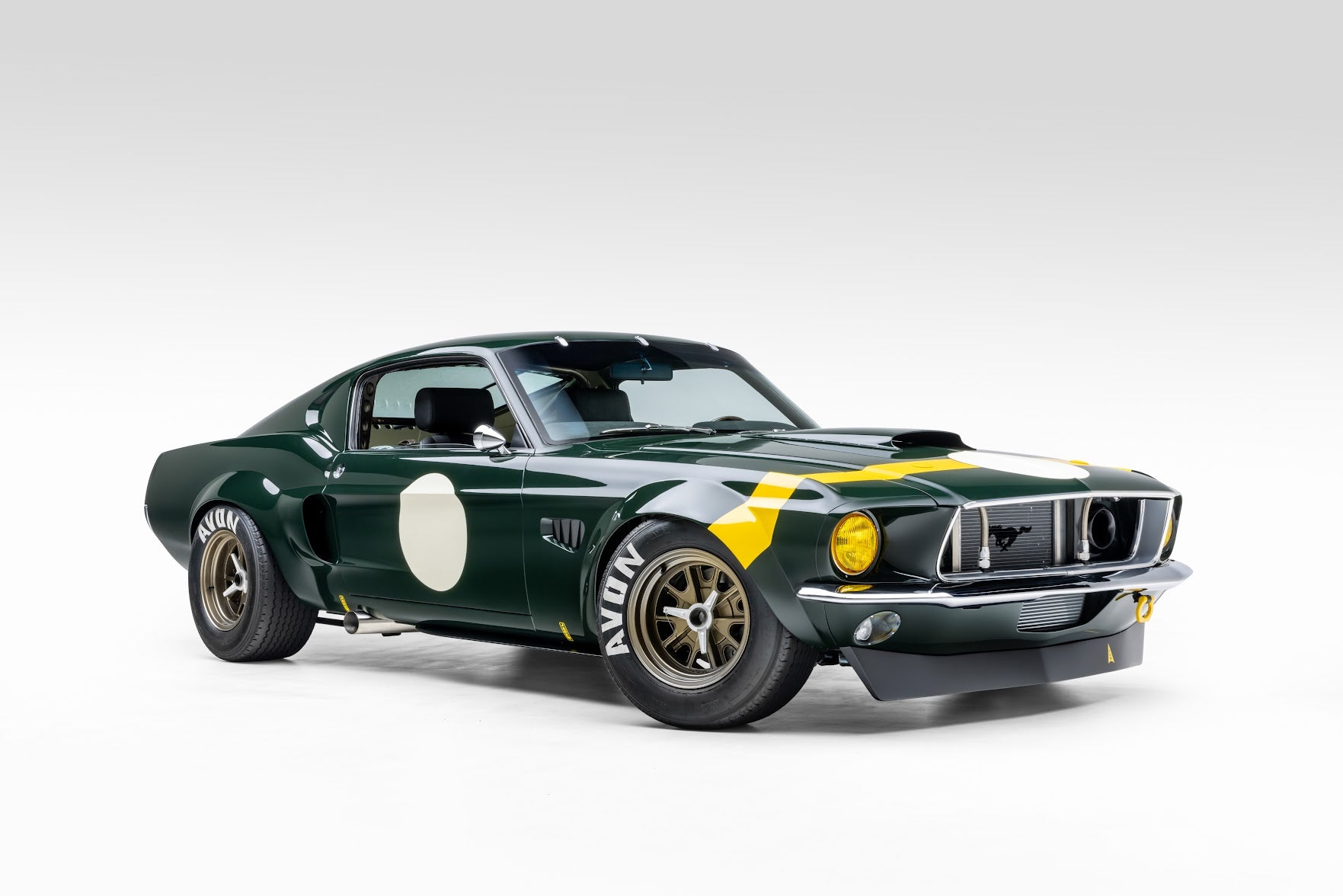
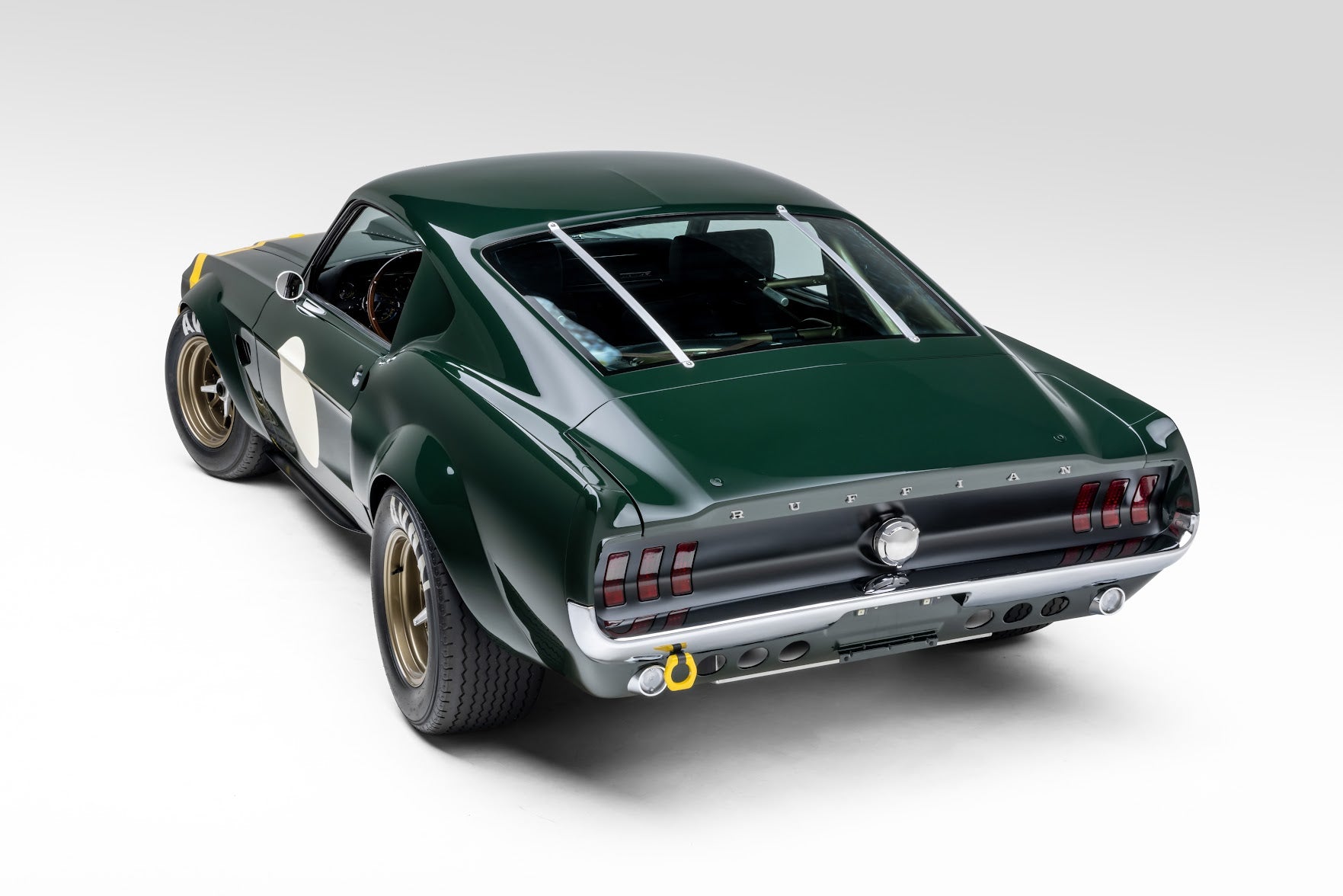
Goal: Create a gentleman racer fastback Mustang inspired by the Shelby FIA Cobras—blending European competition aesthetics with street-first drivability.
Background: Before the big-block 427 Cobra that came to define Carroll Shelby’s legacy, there was a more subtle and arguably more sophisticated machine: the Shelby FIA Cobra.
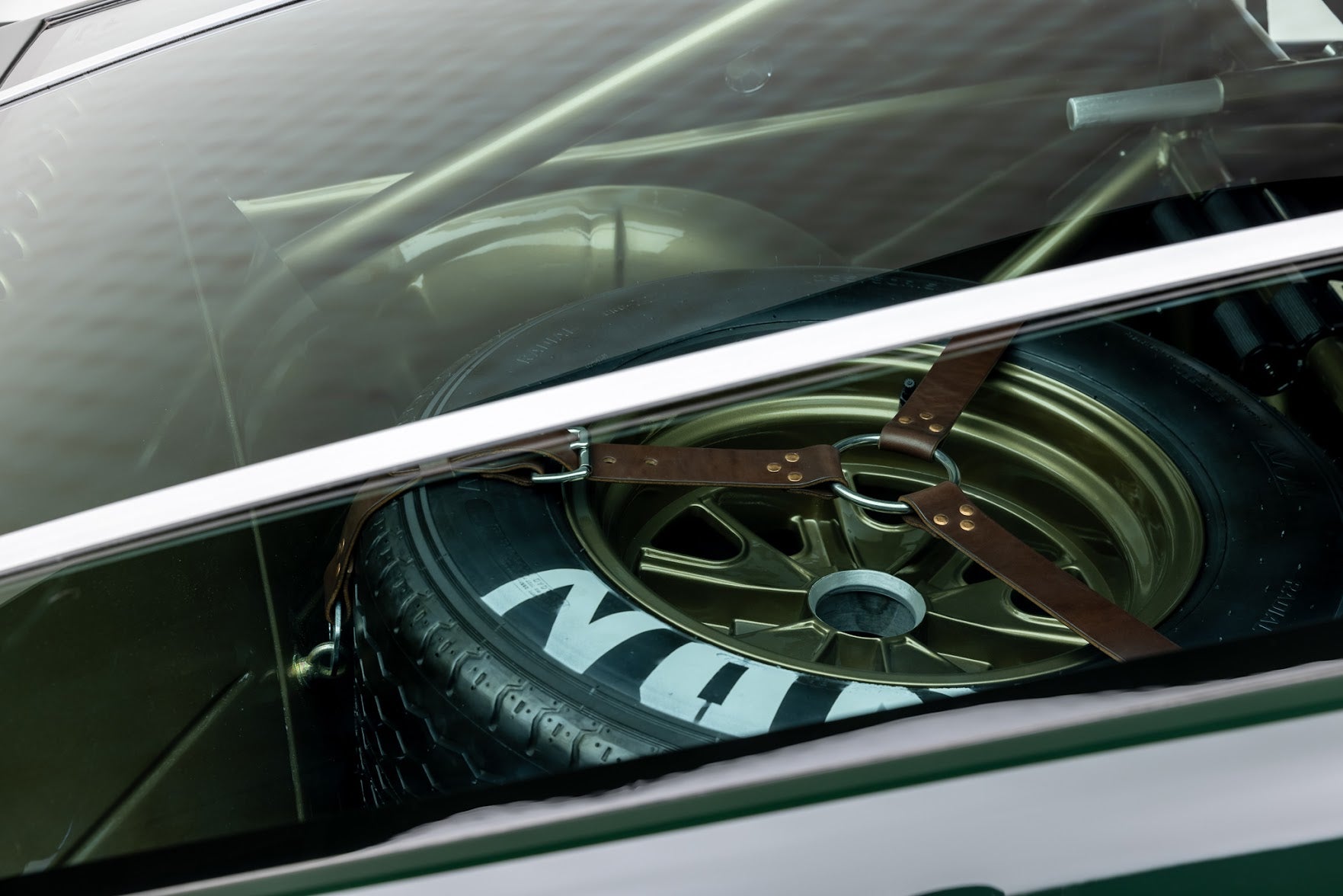
Developed to compete in Europe against Ferrari and Jaguar, the FIA-spec Cobras were wide-fendered evolutions of the original slab-side roadsters. Powered by a high-revving 289 Ford V8 fed by four Weber carburetors and equipped with widened track widths, cut-down doors, windshields, and bumpers to meet FIA requirements, these cars went on to win the 1965 FIA World Manufacturers’ Championship.
The Ruffian FIA Fastback draws directly from that lineage.
Rather than building a GT350 clone, the intent was to translate the functional visual language and mechanical character of the FIA Cobras into a 1967 fastback Mustang—retaining the elegance and restraint of a European gentleman racer while preserving the unmistakable identity of American muscle.
At its core, the FIA Fastback is designed as a street car first: approachable, mechanically honest, and engaging without excess. Performance is purposeful rather than overwhelming, and complexity is avoided in favor of clarity and usability.


-
Chassis and Structure
The FIA Fastback retains its factory Ford unibody architecture, but the structure has been comprehensively reinforced to support modern performance demands.
Upgrades include torque boxes, convertible-spec inner rockers and seat risers, and a six-point roll cage. Factory seams were fully welded at critical load points to increase rigidity, while the shock towers were reinforced with 3/16-inch steel plate to better manage suspension loads. The front subframes were also plated, allowing the car to be safely jacked without structural damage.
These changes preserve the character and packaging of the original chassis while substantially improving stiffness and durability.
-
Suspension, Damping and Brakes
At the front, the FIA Fastback employs tubular steel double-wishbone suspension with revised geometry to achieve improved camber curves under load, incorporating the well-known Shelby drop. The result is increased front-end grip and more consistent tire contact during cornering.
The rear live axle is located via a Watts linkage, providing precise lateral control. A full-floater differential housing incorporates one degree of built-in negative camber to compensate for the tall sidewall tires used on the car, maintaining consistent contact patch behavior under load.
Damping is handled by adjustable Bilstein coil-over shocks at all four corners. Heim joints are used throughout to eliminate compliance and sharpen response.
Braking remains period-inspired but functionally upgraded. Kelsey-Hayes calipers sourced from the significantly heavier Thunderbird were selected to maintain visual and historical consistency. These are paired with substantially wider 1.25" vented rotors to improve heat dissipation and fade resistance.
-
Powertrain Strategy
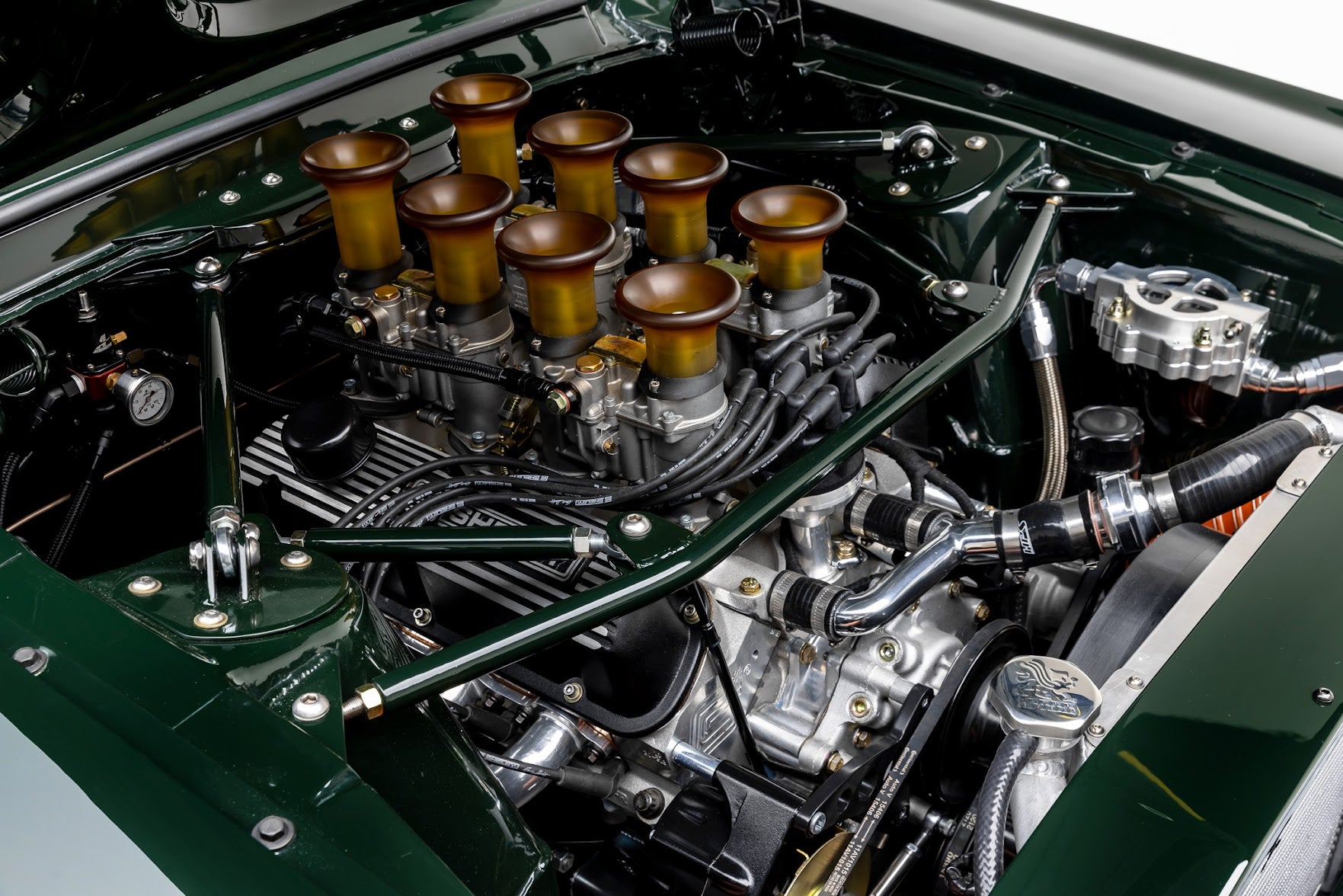
Like the FIA Cobras that inspired it, the FIA Fastback is powered by a 289-based small-block V8—though this example has been bored and stroked to 364 cubic inches. Induction is handled by four 48 IDA Weber carburetors, and the engine produces approximately 500 horsepower on 91-octane pump fuel.
Both the block and cylinder heads are aluminum, removing nearly 200 pounds from the front of the car and improving weight distribution without altering the engine’s fundamental character.
Power is transmitted through a Tremec TKX five-speed manual gearbox. The TKX was selected for its strength and reduced mass compared to a six-speed, aligning with the car’s emphasis on simplicity and mechanical efficiency.
-
Street Usability
Fifteen-inch wheels with tall-sidewall Avon tires contribute to both the correct vintage aesthetic and a more compliant ride. The five-speed transmission reduces shift frequency around town, while fifth gear keeps engine speed low during highway cruising.
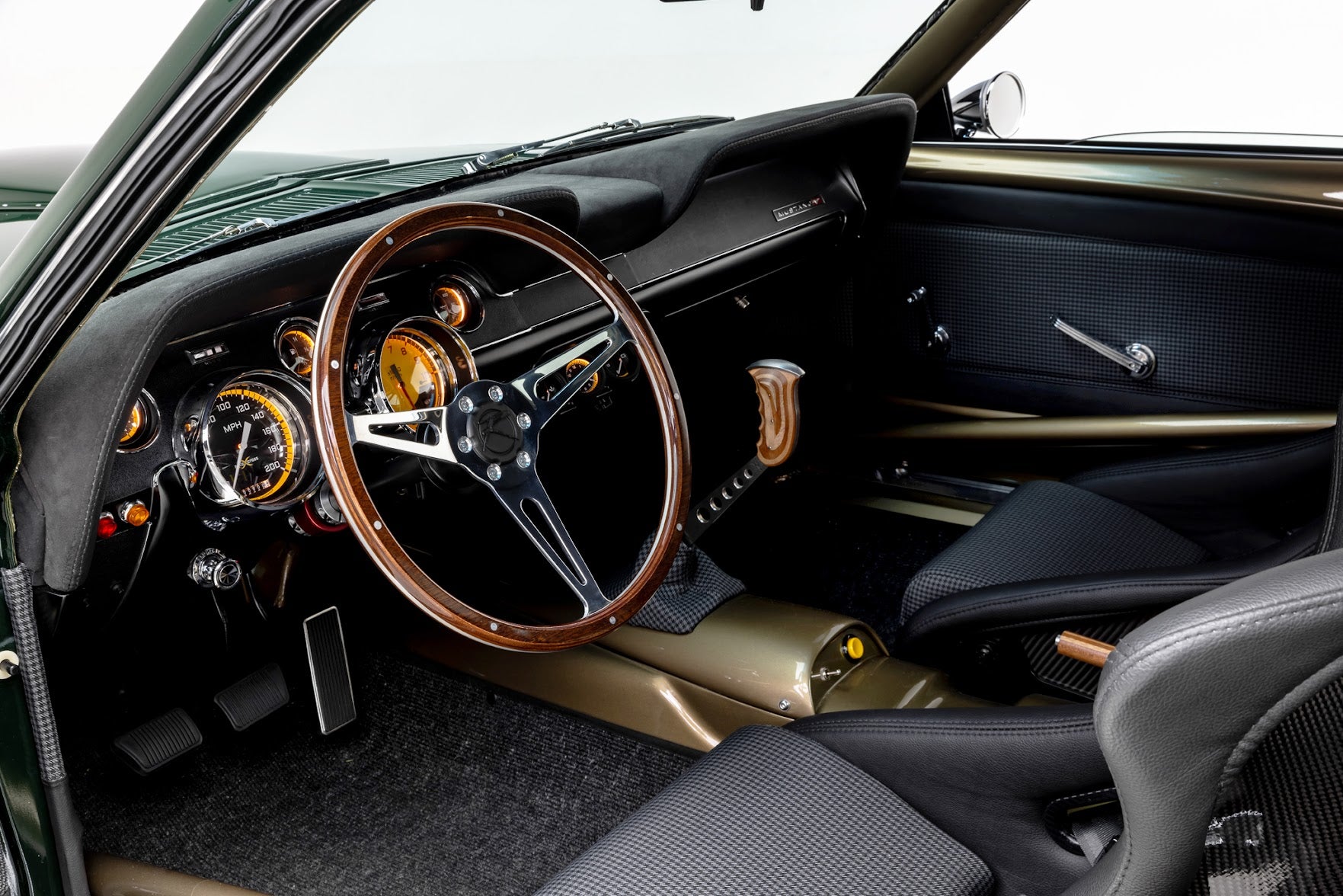
Ingress and egress are aided by a half cage and low door bars shaped to follow the seats, minimizing obstruction. Clutch effort and steering weight are intentionally light, reinforcing the car’s approachable nature. Exterior lighting has been upgraded to LEDs for improved nighttime visibility.
Inside, the interior is intentionally minimal. Only six switches are present: ignition, horn, turn signals, lights, windshield wipers, and high/low beams. The result is a cockpit that is intuitive, uncluttered, and consistent with the gentleman racer ethos.
-
Stance and track width changes
Track width has been increased by five inches to support modern grip levels while maintaining the visual balance of the original fastback. Ride height is set at approximately six inches, a dimension that preserves the vintage stance and works in concert with the 15-inch wheels and tall sidewall tires to deliver a compliant, street-oriented ride.
The result is a car that appears purposeful and planted without looking artificially lowered or visually overworked.
-
Fender, aero, and body modifications
At the front, a carbon-fiber splitter limits airflow beneath the chassis, improving front-end stability at speed. Vents integrated into the front fenders relieve high-pressure air from the wheel wells, reducing lift and improving aerodynamic efficiency.
A functional Cobra-style hood scoop delivers fresh air directly to the Weber carburetors, combining period-correct appearance with real performance benefit. Along the sides, carbon-fiber side skirts increase the low-pressure region beneath the car while visually tying into the side-exit exhaust system.
At the rear, the valance has been perforated in the style of period Grand Sport racers to relieve trapped air at higher speeds. Aggressive fender flares provide an additional 2.5 inches of tire clearance at each corner, enhancing grip while reinforcing the car’s muscular presence without overwhelming its lines.
-
Thermal control
Cooling solutions were integrated with equal attention to function and visual continuity.
The front bumper and lower valance were modified to accommodate a large engine oil cooler, echoing the solutions used on the FIA Cobras. Water cooling is handled by a high-capacity aluminum radiator paired with a modern brushless electric fan to ensure consistent temperature control in both street and competition environments.
Flanking the radiator, large intake snorkels direct fresh air to the front brake rotors. At the rear, the iconic Mustang side scoops have been repurposed as functional ducts, delivering cooling airflow to the rear brakes.
The system prioritizes simplicity, airflow efficiency, and visual restraint—supporting performance without introducing modern visual noise.
-
Outcome
At first glance, the FIA Fastback reads as unmistakably vintage. A closer look reveals modern precision—clean fit and finish, purposeful details, and subtle cues that distinguish it from any Mustang that came before. While the Mustang nameplate spans more than six decades, none have carried this combination of proportion, intent, and restraint. The visual identity is distinctly Ruffian, while still paying clear homage to the competition-bred Shelby FIA Cobras that inspired it.
On the road, the car is immediately approachable. Power delivery is smooth and responsive, controls are light and intuitive, and the overall experience is simple and engaging. It is fast without being demanding, characterful without being temperamental, and mechanically expressive in all the right ways.
The result is a gentleman racer in the truest sense—effortless to drive, rich in feedback, and deeply satisfying without excess.
Ruffian 500
Era: Classic American full-size performance sedan
Goal: Re-engineer a full-size American family car to operate as a modern track-capable performance machine—without sacrificing street legality.
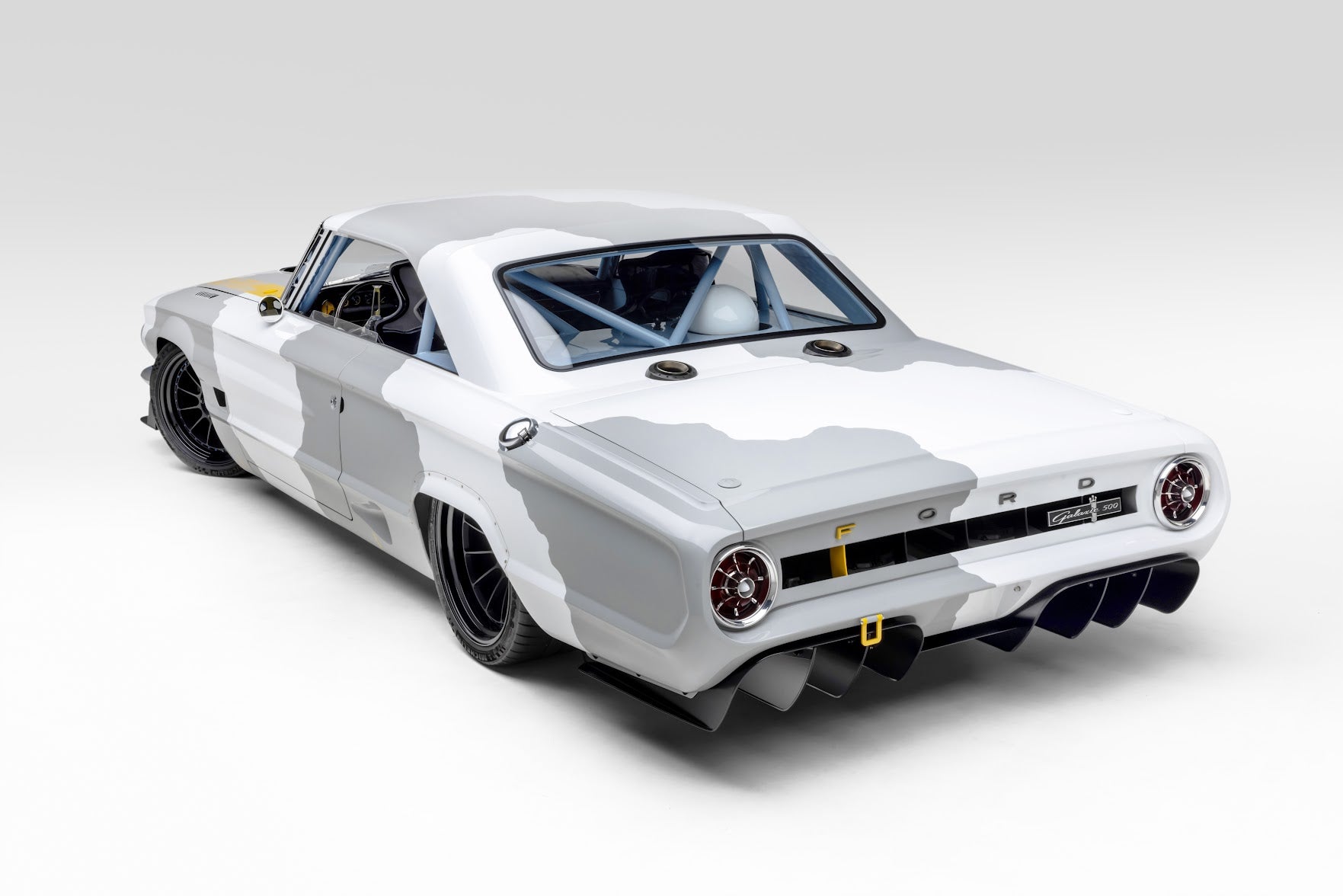
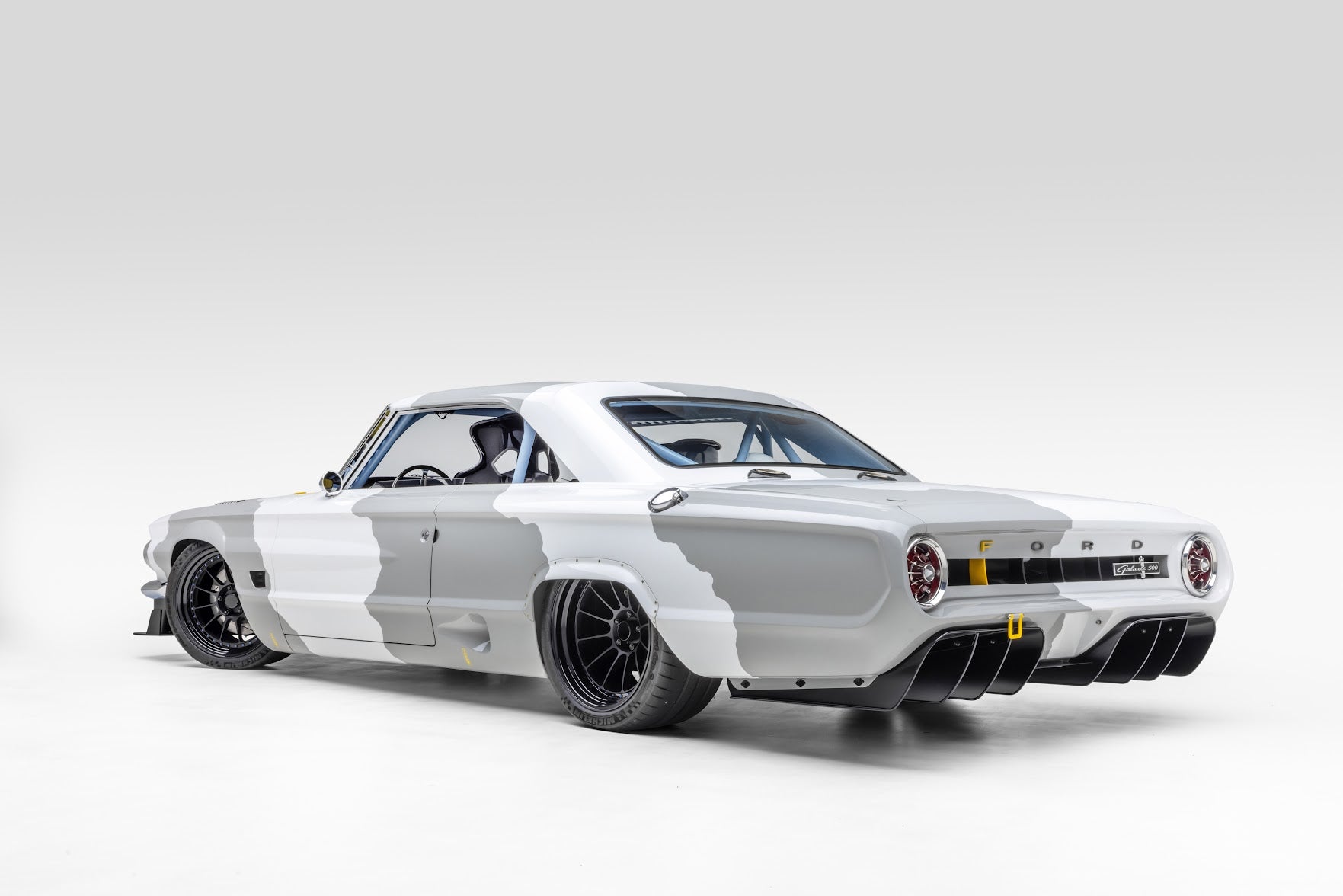
Background: In 1963, Holman-Moody prepared and shipped three factory lightweight Ford Galaxie 500 race cars to Europe to compete in the British Saloon Car Championship. The idea of a massive American sedan racing on European circuits was met with skepticism—until the Galaxies won the championship outright, permanently reshaping perceptions of what an American car could do on track.
The Ruffian 500 draws directly from that moment.
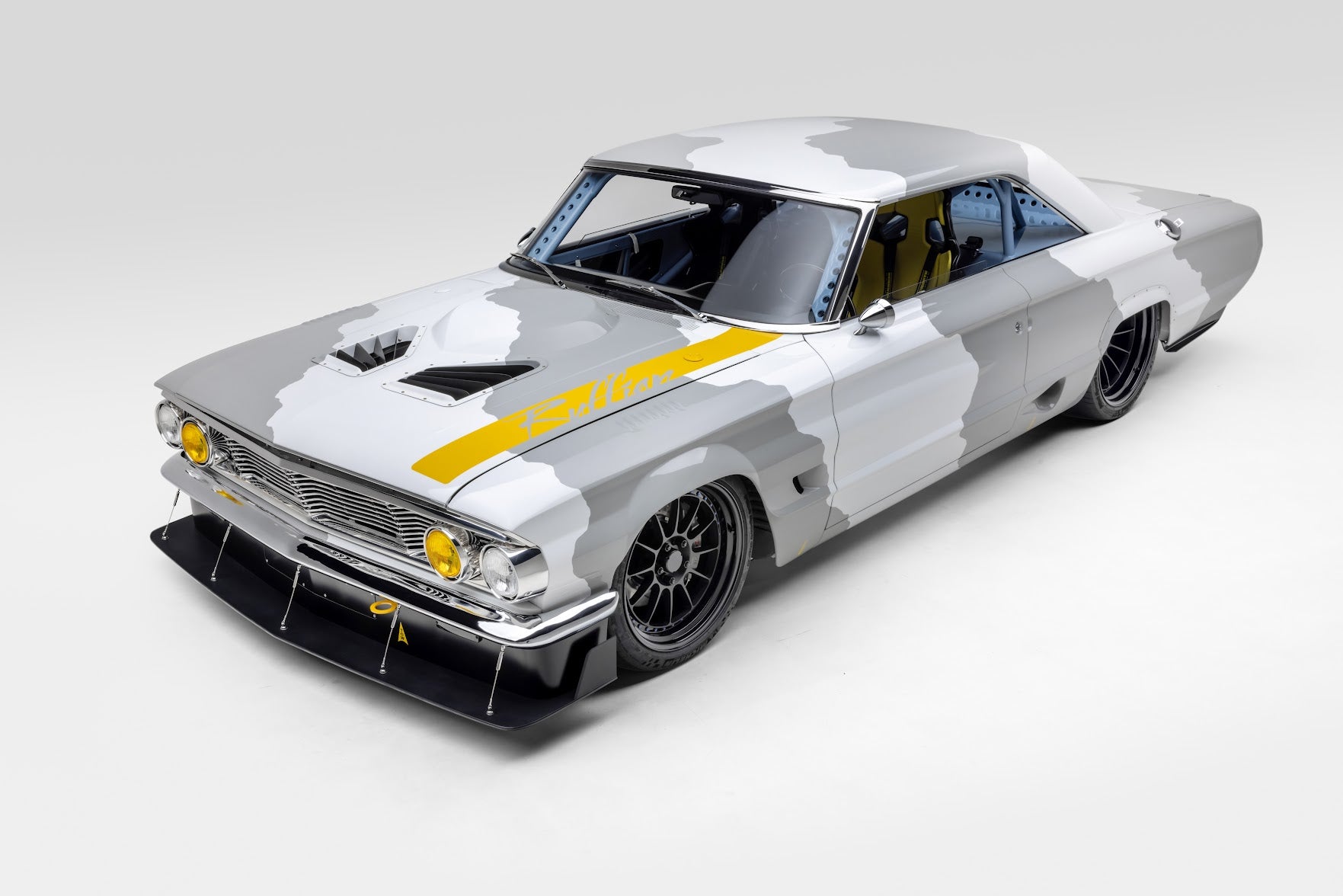
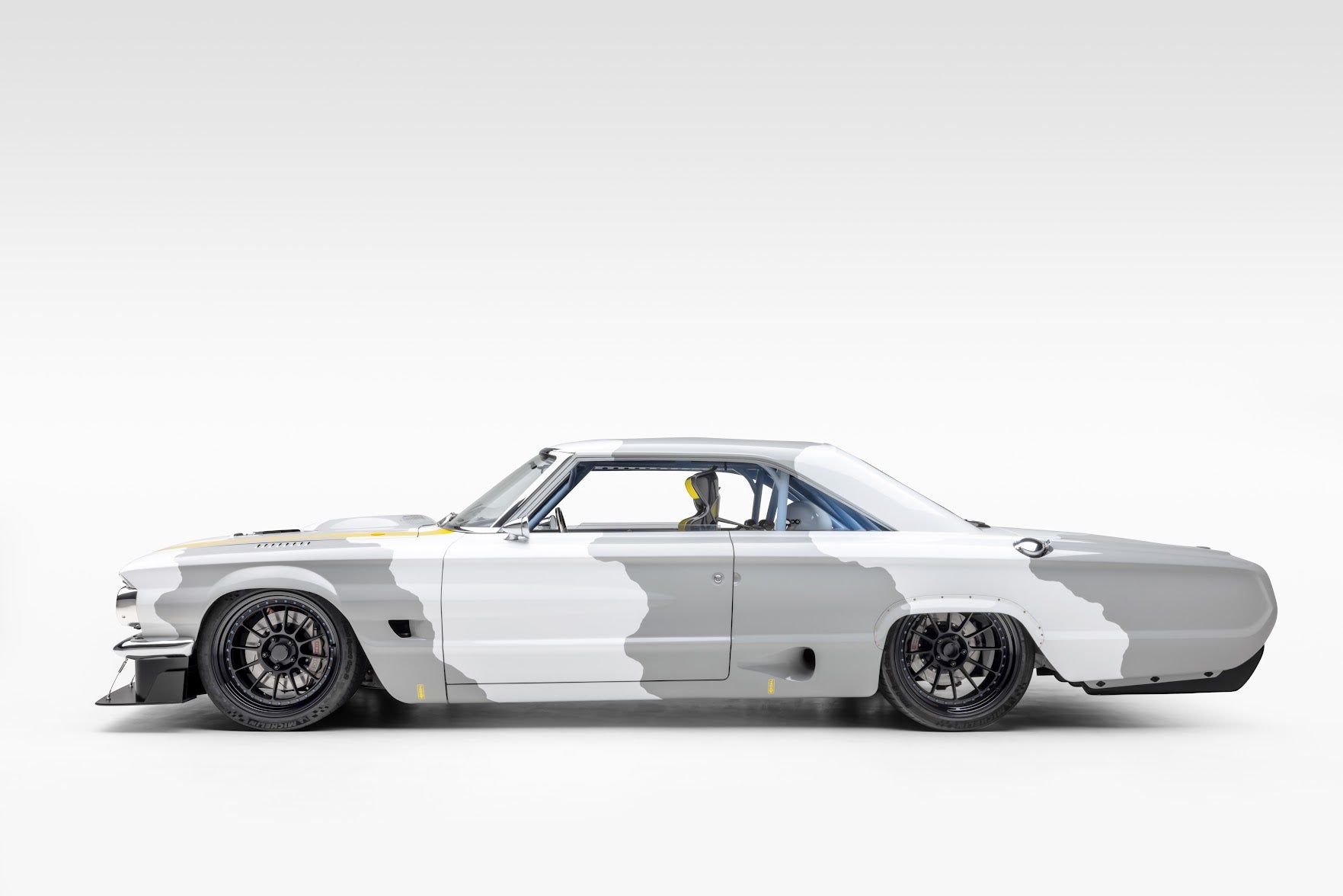
This project was conceived as an answer to a modern question: what if a classic Galaxie were engineered to run with contemporary weekend track-day cars—while remaining fully street legal? The result is a build that prioritizes track performance first, with street usability treated as a necessary constraint rather than the primary objective.
The Ruffian 500 is intentionally uncompromising. It embraces the inherent size and presence of the Galaxie while applying modern engineering and systems to make it capable of sustained high-performance driving in an environment it was never designed to inhabit.


-
Chassis and Structure
Because the Ruffian 500 was conceived as a credible track weapon rather than a conceptual exercise, chassis development was entrusted to long-time race driver, team owner, and engineer Ron Sutton. Sutton brings decades of competition experience and was responsible for the core architecture and performance engineering of the vehicle.
The project is based on Sutton’s Track Warrior Extreme chassis design. Engineering drawings and critical components were supplied by Sutton, with Ruffian fabricating, bending, cutting, and assembling the structure in-house.
Although the original Galaxie was a body-on-frame car, the Ruffian 500 is now a full tube unibody race chassis with an integrated roll cage. The transformation prioritizes rigidity, safety, and suspension control, to the point where the only remaining Galaxie element is the exterior body.
Integrated pneumatic air jacks allow the car to be lifted completely off the ground in seconds, enabling rapid tire changes and service in pit environments.
-
Suspension, Damping and Brakes
At the front, the Ruffian 500 employs Ron Sutton Race Technology’s ultra-long-arm suspension geometry. This configuration achieves zero scrub radius and eliminates initial stiction, allowing the suspension to respond immediately to surface inputs. It represents Sutton’s highest-grip front suspension architecture.
At the rear, a shock-controlled, decoupled three-link solid axle is used. This design absorbs initial shock loads during sudden braking and acceleration, maximizing traction in a manner conceptually similar to how wrinkle-wall drag slicks manage load application—without sacrificing lateral control.
Damping is handled by fully adjustable, custom Penske remote-reservoir shocks, providing the control and tuning range required for sustained track use. Braking is supplied by nickel-finished, six-piston StopTech Trophy calipers, delivering consistent stopping power appropriate for the car’s mass and speed.
All front and rear suspension components utilize oversized bearings, hubs, and wheel studs to ensure durability under repeated high-load track conditions.
-
Powertrain Strategy
To honor the car’s historical roots while achieving modern performance, the Ruffian 500 uses a vintage engine architecture updated with contemporary technology: the Ford FE big-block by The Carroll Shelby Engine Company.
The engine produces over 700 horsepower with comparable torque output and weighs nearly 200 pounds less than Ford's original "R" option engine.
Power is transmitted through a modern T56 six-speed manual gearbox, upgraded with strengthened internals and dog-ring engagement on first through fourth gears. This allows clutchless upshifts on track, but requires proper rev-matching during street downshifts—a testament to the Ruffian 500's "race-car-first" mission statement.
-
Street Usability
Track Warrior Extreme cars typically weigh under 3,500 pounds. The Ruffian 500 weighs approximately 3,920 pounds, with the additional mass being attributed to Ruffian's desire for the car to be usable on the street.
Examples include a functional front bumper, full lighting system, horn, sound and heat insulation, inner fenders to protect the engine bay and trunk from debris, a complete exhaust system, and a full (though spartan) interior which includes headliner, door panels, plexi windows that go up and down, and the original dash. The Ruffian 500 also makes use of factory style hood and decklid hinges.
These additions do not soften the car’s intent, but they do impose constraints that a dedicated race car is free to ignore. The result is a vehicle that remains purposefully track compliant while meeting the legal and functional requirements of street use.
-
Stance and track width changes
The Galaxie’s factory proportions work in the Ruffian 500’s favor. Its original width allows Ron Sutton’s Track Warrior Extreme chassis to fit entirely beneath the bodywork without the need for widened track dimensions.
Frame rails are positioned flush with the bottom of the rocker panels, giving the car an inherently lower visual and physical stance than stock. In street trim, ground clearance is set at approximately 5.5 inches at the front and 6 inches at the rear. This subtle rake improves both visual intent and aerodynamic behavior.
When fitted with 18-inch race wheels and tires, ride height is reduced by an additional inch, further lowering the center of gravity and enhancing track performance without altering suspension geometry.
-
Fender, aero, and body modifications
At the front, taller wheel openings—working in conjunction with a narrow chassis and long control arms—allow 335-section front tires to steer lock-to-lock without interference. At the rear, the low-hanging fender flares are designed to be removable via camlock fasteners, enabling wheel and tire changes.
A functional ABS front splitter acts as a controlled wear item. Under heavy braking, it is designed to contact the ground, reducing airflow beneath the chassis and generating front downforce.
Underbody aerodynamics are handled discreetly. A full-length aluminum belly pan runs beneath the car and feeds into a large rear diffuser. This generates meaningful aerodynamic benefit without altering the car’s iconic silhouette—keeping the performance advantage hidden below the beltline.
-
Thermal control
Thermal management was engineered for sustained track use under variable conditions.
The front spoiler incorporates a quick-release panel that can be opened on hot track days to increase airflow through the radiator, trading aerodynamic efficiency for cooling capacity when required. Air passing through the radiator is exhausted through front fender vents, extracting heat while simultaneously reducing front-end lift.
Large engine and power steering oil coolers are packaged behind the original Galaxie grille, maintaining airflow efficiency without compromising exterior appearance.
At the rear, two matching fan-assisted coolers manage fuel temperature and rear differential oil temperature, ensuring stability during extended high-load sessions.
Inside the cabin, behind the passenger seat, a dedicated helmet cubby provides secure storage for track days. Integrated ventilation actively dries helmets between sessions—an example of track-focused utility integrated without visual disruption.
-
Outcome
The Ruffian 500 delivers an experience unlike anything else on the road. From inside the cabin, its scale is immediately apparent—the cockpit is wide, and the transmission tunnel is substantial, a consequence of packaging the T56 high in the chassis to clear the full-length belly pan. Despite that physical presence, the car drives with the immediacy and precision of a much smaller sports car.
Steering response is exceptionally quick, and chassis reactions are instantaneous. Body roll is effectively nonexistent, and there is no sign of flex or twist in the chassis. The car responds directly to driver input, without slop or ambiguity.
The engine produces enough torque to accelerate aggressively in any gear, and the decoupled three-link rear suspension applies that power efficiently, minimizing the perception of mass. The result is a car that feels far lighter than its size would suggest. The big-block’s unmistakable, vintage exhaust note reinforces its character—forceful, mechanical, and unapologetic.
At the limit, the car remains composed. When the rear tires begin to slide under power, the long wheelbase reveals itself, transitioning slowly and predictably. The behavior is progressive and transparent; the car communicates clearly and never reacts abruptly. It is demanding, but never intimidating.
On the highway, the Ruffian 500 settles into a different rhythm. In sixth gear, engine speed drops below 2,000 rpm, and the car cruises comfortably for extended distances—fully capable of driving an hour to a coastal cars-and-coffee before returning to the track environment it was built to dominate.
Ruffian 40
Era: American endurance racing icon
Goal: Reinterpret an untouchable endurance racing legend through modern engineering, materials, and performance standards.
Background: The Ford GT40 Mark I is widely regarded as one of the most beautiful automotive designs ever produced. Its proportions, silhouette, and overall visual balance remain so relevant that when the Ford GT was introduced decades later, its design language remained unmistakably faithful to the original.
Ruffian approached this project with full awareness of that legacy—and the risk inherent in revisiting a car many consider beyond improvement.
While the GT40’s overall form has aged remarkably well, many of its details, systems, and materials are firmly rooted in the limitations of its era. The Ruffian 40 was conceived as a study in selective modernization: preserving the integrity of the original design while replacing anything that looked, felt, or performed as vintage with contemporary solutions.
Though the Ruffian 40 is based on a Superformance GT40, it was not treated as a replica or tribute.
It is an exploration of what happens when modern technologies, materials, and engineering discipline are applied—without sentimentality—to one of the most legendary cars ever created.


-
Chassis and Structure
The GT40’s original steel monocoque chassis is fundamentally sound, but sustained use on modern tires exposes structural limitations that were never part of the original design envelope. Those limitations were addressed comprehensively.
The front and rear shock towers were reinforced to manage increased suspension loads, and the transaxle mount—which also functions as a rear shock tower brace—was strengthened to improve rigidity under acceleration and cornering. An external roll hoop was integrated into the engine bay, providing additional occupant protection while further stiffening the rear structure.
These modifications retain the character of the original monocoque while allowing it to operate reliably at modern grip levels.
-
Suspension,Damping and Brakes
The original tubular double-wishbone suspension architecture is retained, as its geometry remains effective when paired with modern components. Damping duties are handled by adjustable Bilstein coil-over dampers, providing contemporary control, tunability, and consistency.
The GT40’s historically underperforming braking system was replaced with modern hardware: 14-inch Wilwood rotors paired with six-piston calipers, delivering braking performance appropriate for the car’s speed capability and potential track duty.
Accommodating the brake package required modernization of the wheel and tire system. The car now runs 18-inch front and 19-inch rear wheels wrapped in extreme-summer Toyo Proxes tires.
To improve serviceability and usability, the original spinner-style knock-off centerlocks were replaced with modern splined centerlock nuts that can be torqued with standard tools rather than installed with a lead hammer.
-
Powertrain Strategy
Power is supplied by a modern aluminum-block, dual overhead cam Ford 5.2XS engine producing approximately 580 horsepower with an 8,000 rpm redline. Engine management is handled by a custom-calibrated Ford ECU, ensuring precise control and reliability.
This engine was selected deliberately. Its lower torque output and high-revving character are ideally suited to a lightweight, mid-engine chassis paired with a high-value transaxle, reducing driveline stress while preserving performance.
Electronic fuel injection also eliminates a common GT40 issue: fuel odor in the cabin. Given that the original design does not allow for operable side windows or effective ventilation, this was a meaningful improvement in real-world usability.
-
Street Usability
The GT40 was never intended to function as a street car, and several inherent shortcomings required resolution.
A hydraulic front-end lift system was integrated to raise the long, low nose when navigating driveways and surface transitions. Reinforced jacking points were added to the chassis underside to simplify maintenance and servicing.
Electric power assist was incorporated into the manual rack-and-pinion steering system. Assist is active only at very low speeds and tapers off progressively via vehicle speed input, delivering zero assistance by approximately 30 mph. This preserves unfiltered steering feedback at speed while making low-speed maneuvering practical.
Exterior lighting has been fully modernized at both ends of the car, significantly improving nighttime visibility. A rear view camera has been added and is integrated into the rear view mirror. Climate control—including air conditioning and heat—was also added, further supporting real-world use without altering the vehicle’s fundamental character.
-
Stance and track width changes
Track width has been increased by four inches to better support modern tire sizing and improve front-end capability. While additional rear width offered limited benefit, the increased front track allowed significantly wider front tires—addressing a known limitation of the Mark I platform that was not fully resolved until the later Mark II.
The integration of a hydraulic front-end lift system allows static ride height to be set at approximately 4.5 inches. This enables a low center of gravity and correct visual proportion.
-
Fender, aero, and body modifications
Widened fender arches accommodate 295-section tires at the front and 345-section tires at the rear, bringing the car’s tire footprint in line with its modern performance potential.
A carbon-fiber front spoiler modernizes the nose visually while performing multiple functional roles: reducing airflow beneath the car and directing cooling air toward the radiator. Carbon side skirts further manage underbody airflow by increasing the low-pressure region beneath the chassis, contributing measurable downforce without visual excess.
At the rear, the roof-mounted air scoop has been re-engineered into a dual-chamber system. The forward section supplies fresh intake air to the engine, while the rear section extracts hot air from the engine bay, improving thermal evacuation.
-
Thermal control
Thermal management was developed specifically around modern engine behavior and real-world street use.
Unlike vintage engines, modern powerplants are designed to operate at higher, more tightly controlled temperatures. Because this car sees regular street driving, an external oil cooler was deliberately avoided. Introducing one would unnecessarily delay oil warm-up, and cold oil presents greater long-term risk in street applications than elevated—but controlled—operating temperatures.
Instead, emphasis was placed on foundational heat management. A high-capacity aluminum radiator with modern high-CFM electric fans is mounted at the front of the car, while extensive venting in the rear clamshell allows engine bay heat to escape efficiently.
Packaging is tight due to the physical size of the dual overhead cam engine. As a result, critical sensors are protected with reflective thermal shielding, and the entire exhaust system has been ceramic-coated inside and out to reduce radiant heat and lower under-hood temperatures.
The objective is rapid attainment of operating temperature, followed by sustained thermal stability under aggressive driving conditions.
-
Outcome
The Ruffian 40 represents a deliberate balance between legacy and modern performance. Acceleration, braking, and cornering now align with the expectations set by a Le Mans–winning endurance racer, allowing the car’s function to finally match its timless form.
Day-to-day usability has been meaningfully improved without erasing the defining characteristics of the original design. While certain limitations remain when compared to contemporary sports cars, those traits are inherent to the GT40 architecture and are integral to the experience rather than shortcomings to be engineered away.
The result is not a reinterpretation that softens the car’s identity, but one that allows it to be driven—and appreciated—at a level its original design always suggested.
The OG
Era: American Muscle
Goal: Build a Trans-Am–inspired dual-purpose car for street driving and SCCA autocross competition.
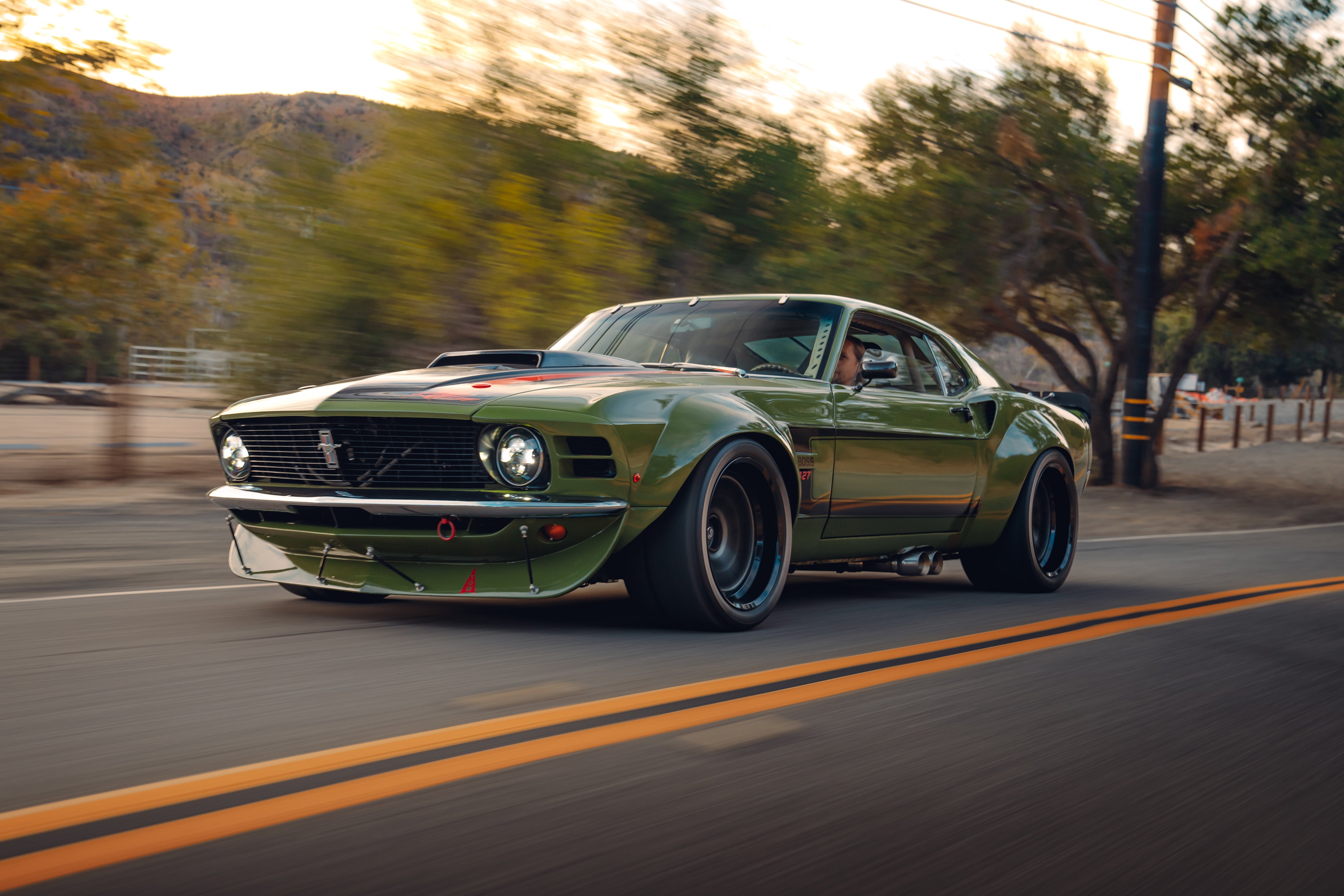
Background: The first Ruffian was conceived as a true do-everything car. Developed within clear financial constraints, every component was selected based on a maximum performance-to-cost ratio rather than prestige or excess.
On the street, the car needed to be compliant, comfortable, and approachable—easy to drive without constant attention. In competition, it needed to deliver high mechanical grip, balanced handling, strong low-rpm torque, and precise, low-effort steering suitable for SCCA autocross use.
The result was a vehicle engineered to operate convincingly in both environments, without sacrificing one to serve the other.


-
Chassis and Structure
The car retains its original Ford unibody architecture, extensively reinforced to support modern performance demands. Structural upgrades include torque boxes, convertible-spec inner rockers and seat risers, fully welded structural seams and a full ten-point roll cage, resulting in substantially increased rigidity without abandoning the original platform.
-
Suspension and Damping
Given the car’s dual-purpose mission, electronically valved Tractive dampers form the core of the suspension system. They provide real-time adjustment between street and competition settings, with deeper calibration available via laptop, allowing meaningful changes in compliance, body control, and balance without mechanical reconfiguration.
-
Powertrain Strategy
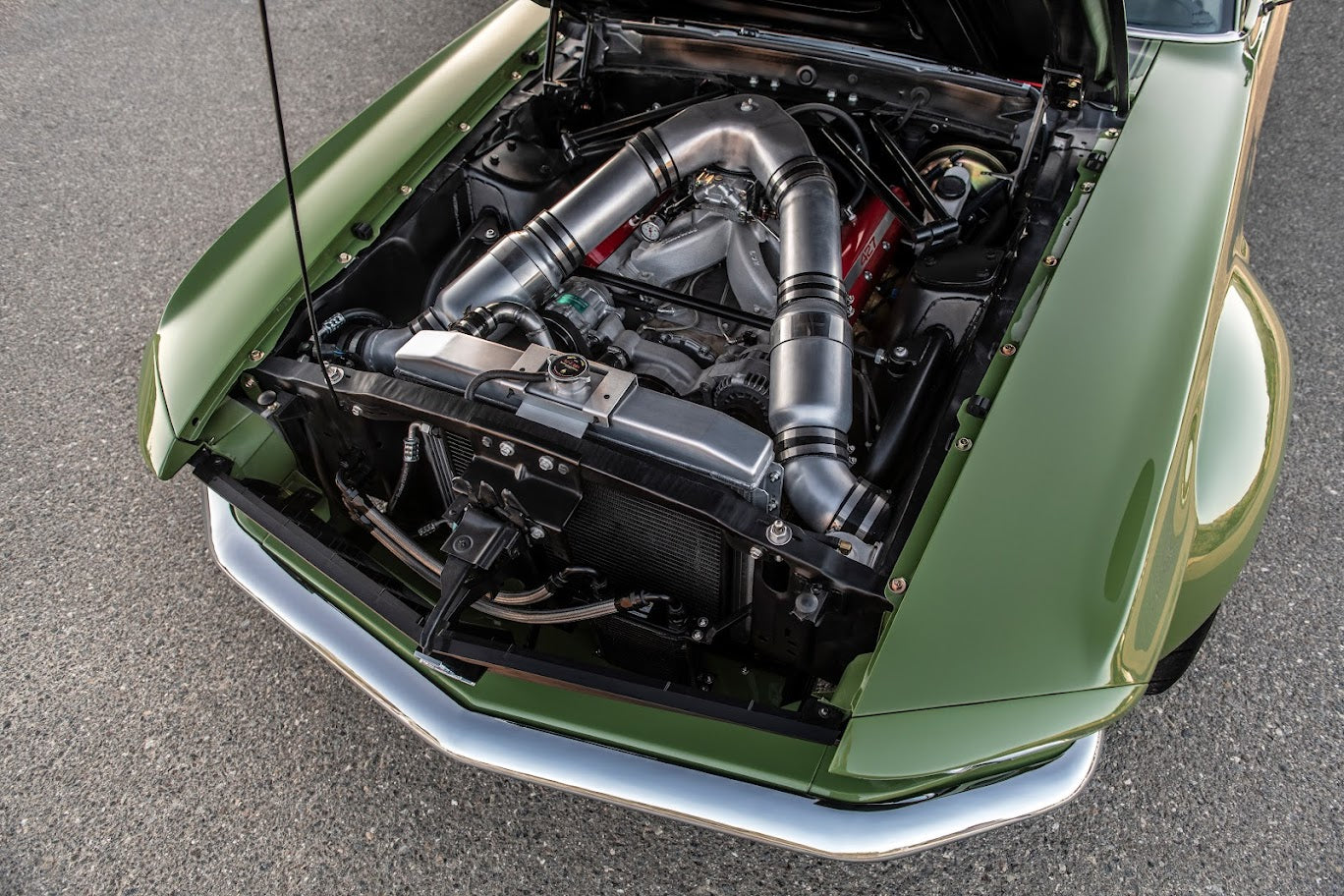
Power comes from an aluminum-block, 427-cubic-inch LS3 producing approximately 625 horsepower. While unconventional for some purists, this choice delivered a strong performance-to-cost ratio, broad aftermarket support, and straightforward serviceability. Paired with a six-speed T56 manual transmission and aggressive 4.11 final drive gearing, the car delivers strong low-end torque while remaining capable of relaxed highway cruising.
-
Street Usability
With real-world driving in mind, this remains one of only two Ruffians configured with air conditioning and heat—reinforcing its role as a genuinely usable street car.
-
Stance and track width changes
Ground clearance is set at five inches—low enough to reduce the center of gravity while retaining sufficient clearance for real-world street use, including shopping mall speed bumps. Track width has been increased by six inches, improving lateral stability and overall chassis confidence.
-
Fender, aero, and body modifications
The nose has been lowered by one inch, a modification historically employed by Trans-Am teams to reduce frontal area and improve aerodynamic efficiency. Front and rear glass are flush-mounted, decreasing drag while visually modernizing the vehicle’s profile.
A functional front spoiler limits airflow beneath the car, improving front-end stability. Hand-formed steel fender flares add three inches of additional clearance per side, accommodating 315-section tires at the front and 345-section tires at the rear.
Out back, an aggressive aluminum wicker bill–style spoiler generates usable downforce at low speeds, enhancing stability and grip in tight, transitional environments such as autocross courses.
-
Thermal control
Thermal management is addressed as an integrated system rather than an afterthought. A large engine oil cooler is positioned behind the grille, while the factory headlight vents have been repurposed as functional intake inlets.
Unused negative space behind the grille has been sealed, ensuring that incoming airflow is directed through the radiator core rather than spilling around it—maximizing cooling efficiency at both street and competition speeds.
Below the front bumper, dedicated air scoops deliver cooling airflow directly to the front brake rotors. At the rear, fender-mounted vents route fresh air into the trunk area to supply the rear differential oil cooler, maintaining temperature stability under sustained load.
-
Outcome
The OG remains one of the most engaging Ruffian builds, both on the street and in autocross competition. Steering response is quick and direct, handling behavior is predictable at and near the limit, and shift quality is precise and consistent.
Power delivery is linear, with a broad, flat torque curve that makes each gear usable and eliminates surprises during transient inputs. The result is a car that rewards commitment without punishing mistakes.
In its street damper setting, ride quality is notably compliant. The sport setting provides the balance and control required for competitive autocross use on street tires, while the race setting delivers the body control and responsiveness needed for events run on slicks.